
Generally, museums are solely responsible for recognising and reducing their own carbon footprint. Here at Comunn Eachdraidh Nis we are fortunate enough to have had expert advice from architects, builders and electrical engineers in the re-construction of our nineteenth century building and with this, every effort has been made to make our building as environmentally sustainable as possible. The technology aiding carbon reduction is constantly changing and we aim to keep as up-to-date as we can to continue to reduce our carbon impact and reduce our footprint when and where possible.
Each aspect of our building requires a different approach and that is why we now have a dedicated Sustainability Development Officer implementing any changes as technology develops.
Please click on the links below to see how we are developing our different departments.
Building – Sgoil Chrois
Plant room
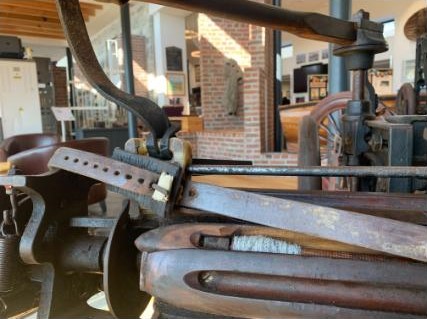
Our building was the former Cross Primary School, constructed in 1879. The school closed in 2011 and it was then that Comunn Eachdraidh Nis (CEN) took ownership of the building. This building was redeveloped in 2019 to become an innovative and welcoming community hub with many community groups using it regularly for gatherings and events.
Public buildings of this era are notoriously costly to run. The renewable heating system is an integral part of the wider redevelopment of the centre. It aims to make the building as energy efficient and as cheap to run as possible, as well as increasing comfort levels for users. The system incorporates underfloor heating and solar photovoltaic array in order to make the overall system as efficient as possible. Insulation and double glazing were also included within the main project works. The photovoltaic array is also now linked to an energy store that runs an immerser that powers some of the hot water demand for the building.
Heating system
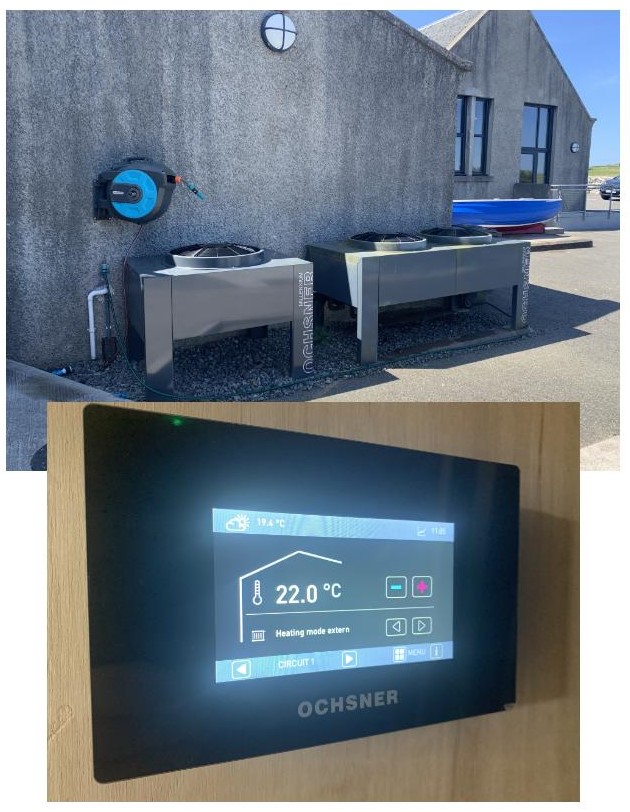
The evaporator, located at the rear of our building, collects energy from the air and feeds it via the refrigeration pipe to the heat pump or condenser.
OCHSNER heat pumps are manufactured exclusively in Austria where they regularly work in temperatures of -20⁰. Today, the company is recognised as one of the sector’s international technology leaders. This heat pump is 400% efficient, given that every kw of electricity used yields 4kw of heat. The condenser feeds the buffer tank which stores the energy from the heat pump typically at 35C and the underfloor heating has been designed to work at this temperature to maximise the efficiency of the system.
A smart control system is also in place, along with thermostats at various points, to ensure the optimal running of the system. The smart control system connects to the internet so that the system can be operated remotely. It also enables troubleshooting to be undertaken without having to visit the site.
The condenser then connects to the buffer tank which feeds in to the underfloor heating system. It also collects any excess heat from the main building which comes through the ceiling vent in the museum.
In order to optimise the system, we aim to run the heat pump at a higher temperature than would otherwise be the case during times where there is ‘spare’ electricity from the solar PV panels, or during the night when the electricity tariff is at the off-peak rate. This will ensure that there is energy stored for use later in the day. The heat pump will also be able to operate at the usual, low temperature heat, providing heating for the wet underfloor and radiator heating system, and at a very high temperature during times when there is a requirement for more hot water in the hot water tank.
Underfloor Heating

As part of the design, we have also introduced an innovative approach to maximise solar gain in the building where areas of floor exposed to the sun through south-east facing windows are tiled in slate to absorb heat more effectively. The ‘Green Ness’ floor has been expressed as islands within the timber flooring.
The underfloor heating system at this point has a higher-than-normal density of underfloor pipework in order that passive solar collection can be trialled. During times of solar collection, the heat pump can be turned off but the heating circulation pumps left on to distribute heat collected by the pipes beneath the dark floor throughout the rest of the system.
This allows for underfloor heating to be installed on a joisted floor with minimal impact on floor height and still running at a very efficient flow temperature. Utilising the floors as a thermal generator offers an exciting opportunity to test this simple technique, using standard construction products in an innovative manner. The principles of the idea are simple yet, when considered holistically, offer an effective method to harness renewable solar heat. It also benefits the museum by regulating temperature during periods of intense sunlight.
Hot Water
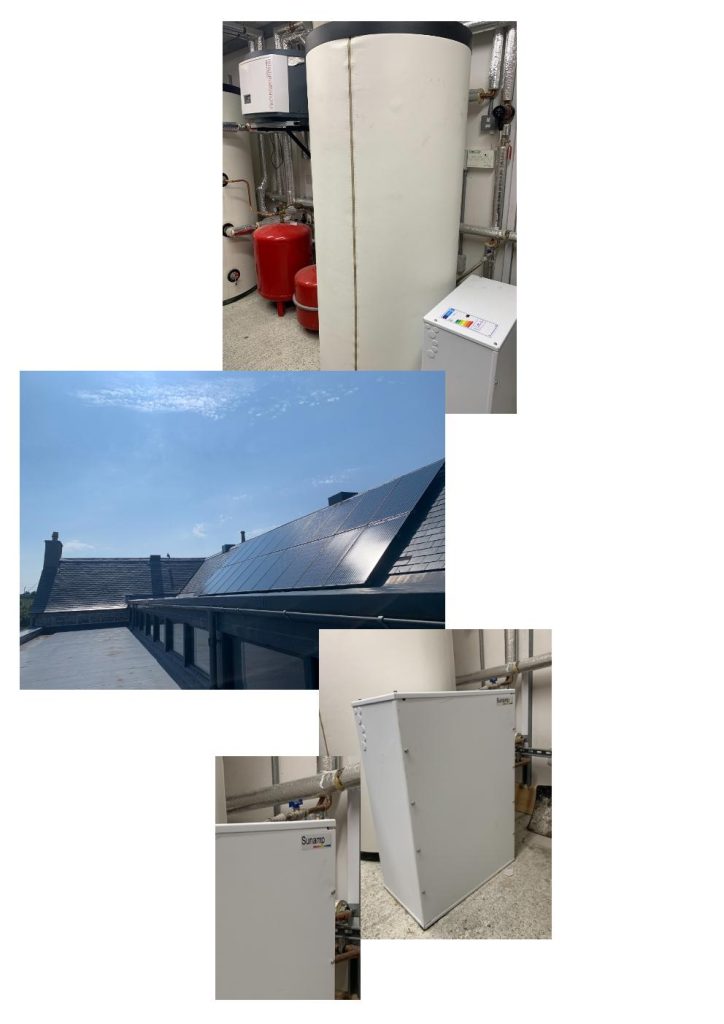
The hot water comes from a thermal store. Here the aim is to run the temperature much higher to provide ample hot water for service users and the café kitchen. Despite the higher temperature the system is still very efficient. It has two sources of energy.
The mini Europa DHW heat-pump recovers waste heat from the building and is able to use this to run at a high temperature. If you look above you in the main museum area you will see the vent which recovers the heat from the main museum. This allows a good regulatory air flow in the museum whilst also not wasting the heat accumulated in the space.
Sometimes there is excess energy from the PV system which can’t be readily used in the building. Normally this would just go back to the grid but it is far more efficient and cost-effective if that energy can be stored. Phase change heat batteries, such as this example produced by SunAmp, optimise the operation of renewable heat sources by storing excess energy, then providing heated water when required. During times of excess heat, the material ‘melts’, thus storing energy by changing phase. When heat is required, the material re-solidifies, giving the heat back out. The system can store the same amount of energy as a large hot water tank.
This project brought together experts in building design, architectural experience and energy to review which renewable system would be best for the building. As part of this work this specialist team has been able to incorporate innovation, in particular the storage of renewable energy, as a key element of the project. CEN is a good example of how old buildings can be enhanced and improved to allow for new technologies to be installed.
Museum and Archive
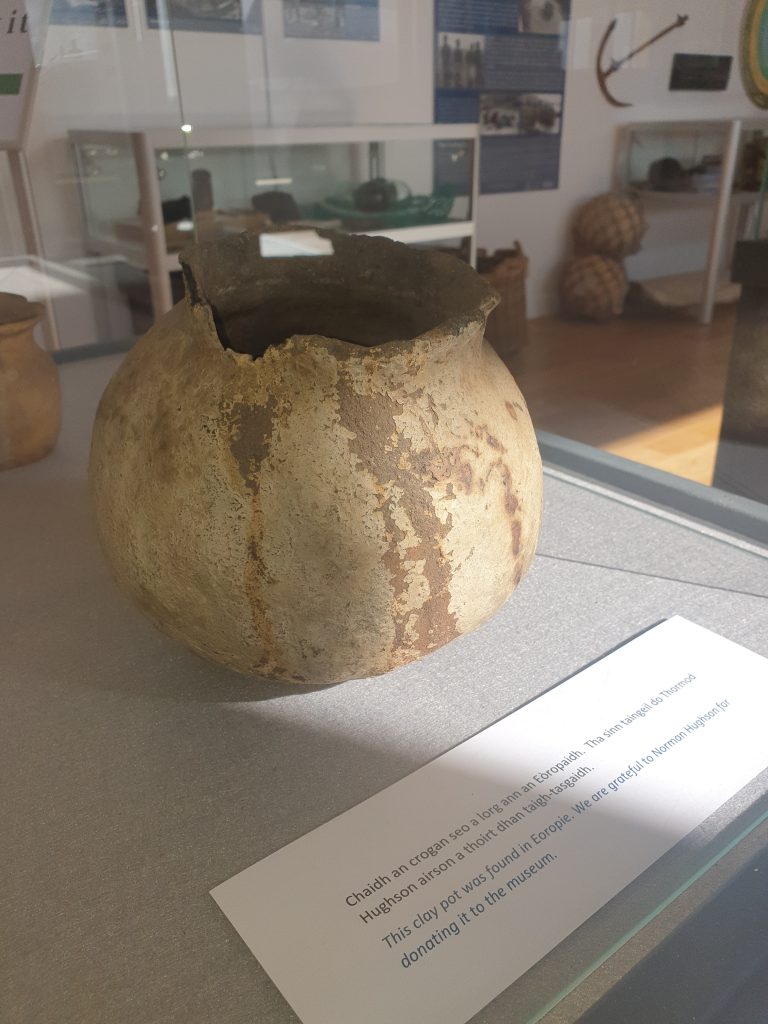
In 2019 a major redevelopment of the former primary school was completed to create a bespoke museum space which could be adapted for community events. Air source underfloor heating, LED lighting, increased insulation and energy efficient windows were installed. Since then, we have fitted thermal blinds that retain or reduce heat, be it winter or summer.
When specific conditions are to be met for artefacts or collections or items on loan, we are able to adjust all those energy efficient measures to suit each individual requirement. Where in the past a general environment condition was kept across the whole of a museum, we are now able to treat each display individually, making it better for the display and the building efficiency, reducing lighting and heating where it may not be necessary and reducing the overall environmental impact of the museum.
Polycrub
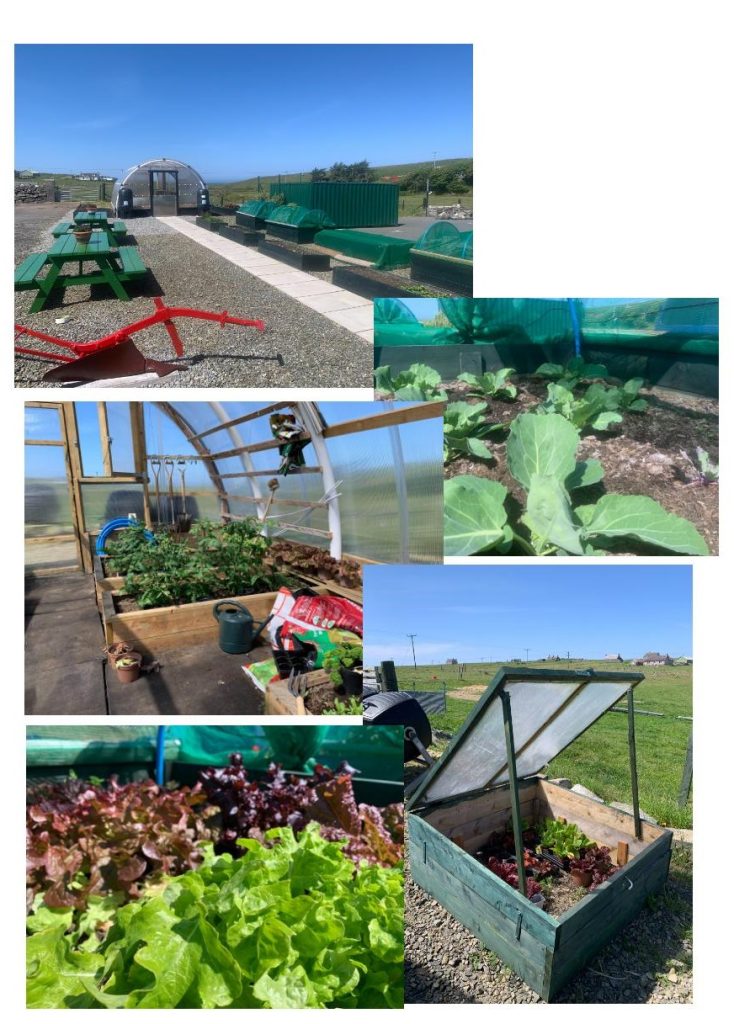
Growing our own salad and vegetables for our café has become a priority. We recognise the impact fruit and vegetables have when being imported and are now in a position to grow some of what we need, on site. Salad and root vegetables are our main crops as we use these the most. Anything we can’t grow ourselves, but can be sourced near-by, will be bought from our neighbouring growers in the North of Lewis. We are lucky enough to have a great network already available to us and we hope to utilise and assist in expanding it where and when possible.
Gift shop

Our shop supports local art and craft producers by providing an outlet for their products. We also produce a range of Gaelic souvenirs and greeting cards, giving our visitors and local customers an opportunity to buy something not just produced locally, but also totally unique.
Staff

All our staff and volunteers have an interest in what we can do, as a collective, to help reduce our carbon footprint. We have an environmental policy which gives us clear goals in making CEN as energy and environmentally efficient as it can be.
Future
As the use of electric vehicles becomes increasingly popular, it is vital that visitor attractions such as CEN, provide EV charging points for service users. Following months of planning, we will shortly be installing two rapid charging EV stations which will be ready for use before the end of 2023. Please keep an eye on our Facebook page for more updates.
As technology continues to develop, it is natural that what we have in place today will be replaced with something more refined and even more efficient in the future. We will strive to keep up with the latest technology to be as energy efficient as we can, to ensure the future of CEN for the benefit of our community and visitors to North Lewis.