

Crofting
Crofting is small-scale, subsistence farming which has sustained families throughout the Highlands and Islands of Scotland since the 18th century.
Consisting of a few acres of arable land for individual crofts and larger areas of ‘common grazing’ for community use, the system enables crofters, who are almost all part-time, to cultivate the land, produce crops and keep livestock.
Crofters pay an annual nominal rent to the landowner: the 56,000 acres in North Lewis are community owned since 2007, with crofter tenants paying a nominal rent to Urras Oighreachd Ghabhsainn (Galson Estate Trust).

Fishing
The Ness fishing industry reached its peak in the 19th century. Rich fishing grounds off the Butt of Lewis yielded record catches of ling and cod, but also the more lucrative halibut and turbot.
From the pier, the catch was carried in creels, usually by women employed by curers, to the curing station where the fish would be gutted, filleted, salted then dried on flat rocks nearby. Trading smacks delivered large quantities of salt and other materials, then loaded the cured fish for export.
Local harbours are now mainly used for recreational fishing, with some commercial creel fishing in the summer.

Weaving
Harris Tweed is a unique woollen textile, hand-woven for centuries by islanders throughout the Outer Hebrides, at their own homes.
In 1846, when Lady Dunmore, widow of the Earl of Dunmore, owner of Harris, replicated their clan tartan in Harris Tweed for her staff, this introduced the cloth to her mainland friends, beginning what we now know as the Harris Tweed Industry.
Around 1920, hand looms were replaced by the Hattersley loom, which became the workhorse of Harris Tweed production until the early 1990s when the new double-width Bonas-Griffith loom was introduced.

Butt of Lewis Lighthouse
Designed by David Stevenson and built in 1862, the Butt of Lewis lighthouse stands at Rubha Robhanais, the most northerly point in the Western Isles.
Rising 37 metres, the tower itself is unusual in that its red brick facade is unpainted.
The light has a range of 25 nautical miles. Buildings within the complex provided accommodation and work spaces for lighthouse keepers until 1998 when the lighthouse became automated.

Rona Cross
Dating from the 10th or 11th century, Saint Ronan’s Cross is the oldest artefact in the Comunn Eachdraidh Nis museum.
The stone cross, featuring the figure of a naked man and three holes indicate the Trinity, suggests the merging of pre-Christian and Christian beliefs.
Recovered last century from the island of North Rona, forty-four miles north of the Butt of Lewis, the cross was believed to mark the grave of Saint Ronan and was donated by the Friends of St. Moluag’s church in Eoropie to Comunn Eachdraidh Nis.

The Decca Station
The Decca radio navigational system for ships and aircraft became operational in its basic form in the 1940s and continued to provide essential and highly-rated support until it was replaced by the more technologically advanced GPS in 2000.
Transmitter stations were established in Lionel in 1956 and in 1977, to augment coverage in the northern Irish Sea and into the Atlantic. Comunn Eachdraidh Nis holds the most comprehensive collection of Decca equipment in the UK.
The World Wars
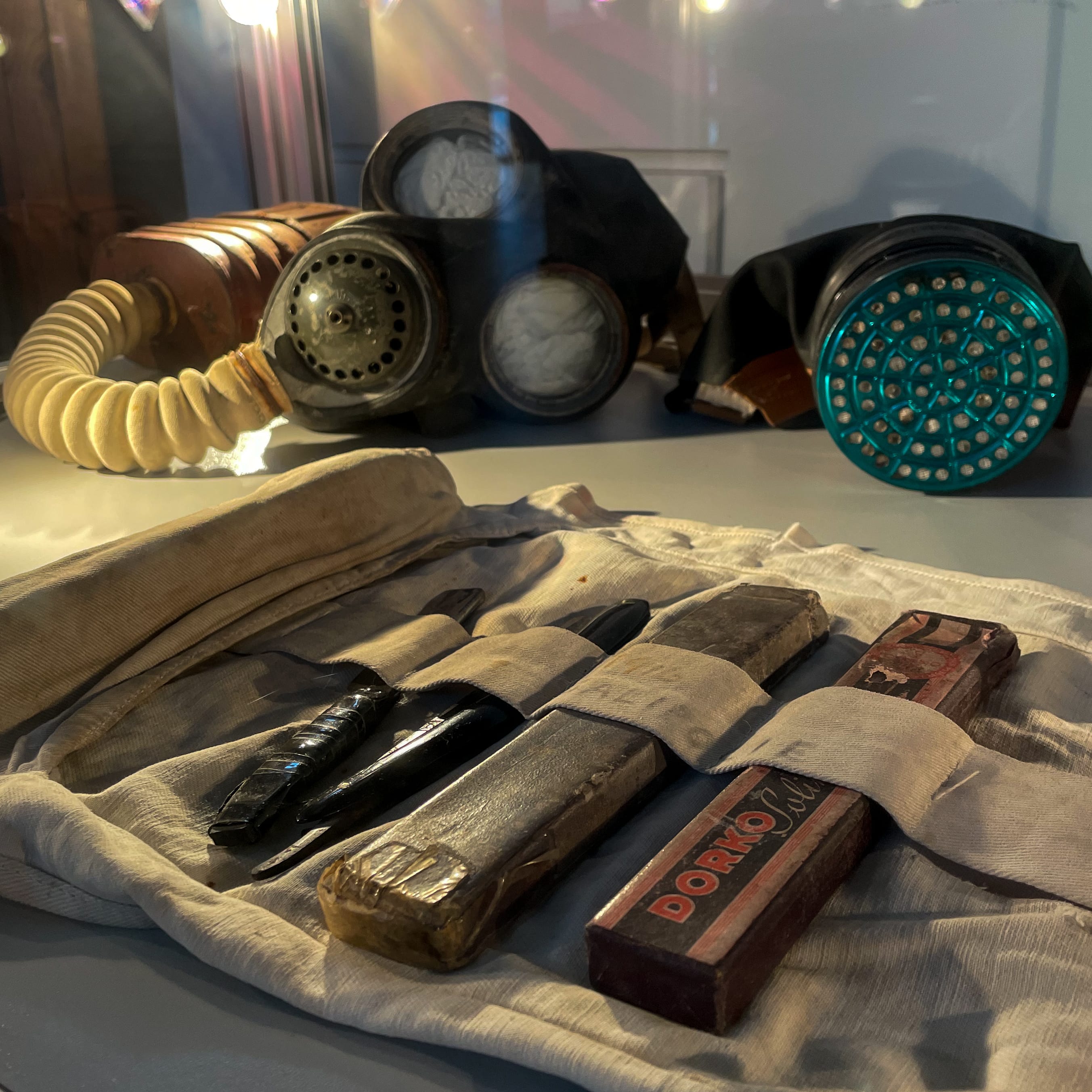
At the heart of the community are memorials to those who lost their lives in the conflicts of the last century.
North Lewis communities suffered disproportionate losses during the two World Wars. Comunn Eachdraidh Nis is proud to pay tribute to the many who served and those who paid the ultimate price.
By the cruellest twist of fate, over two hundred of those who survived the First World War were to lose their lives, within sight of home, when His Majesty’s yacht, Iolaire, foundered on rocks outside Stornoway harbour on 1 January, 1919.
Local Businesses
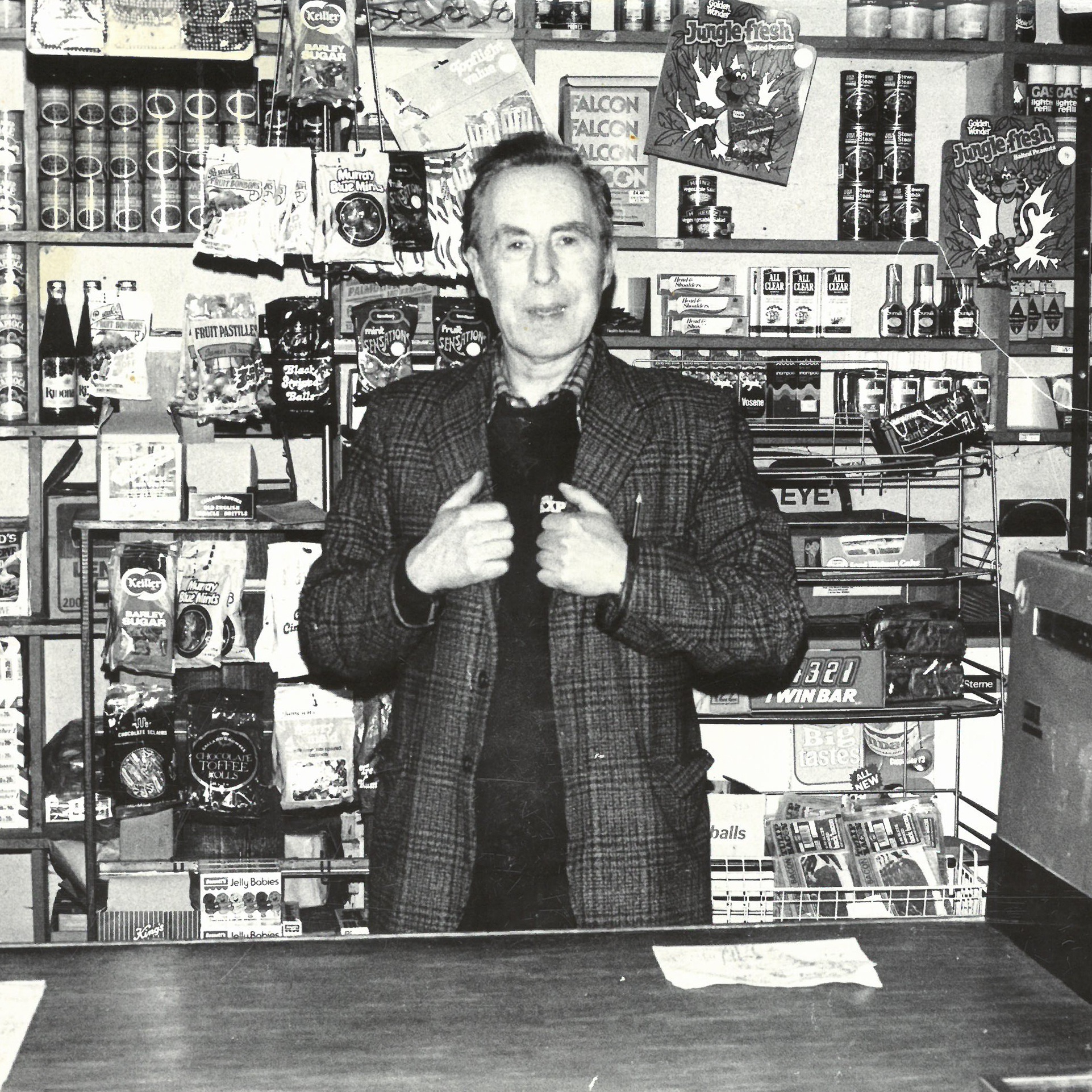
Communities in the north and west of Lewis were for centuries enterprising and largely self-sufficient.
Distance from Stornoway, poor road conditions and lack of adequate transport provided local entrepreneurs with new opportunities.
Each village from Eoropie to Ballantrushal had a least one general merchant’s shop. These emporiums supplied a range of essentials for home and hearth, crofting and fishing, stocking everything from coarse salt to candles, paraffin to papers. The village shop was, during the day, a life-line for all and, in the evenings, a cèilidh gathering place for menfolk, young and old.
Specialist suppliers also thrived. Businesses, including cobblers, bakers and even two lemonade factories flourished in an area remote from the centre of commerce.